

ICEBOY roi breakdown
The Hidden Cost of Buying Wholesale Ice
The retail ice market is entering a structural squeeze, and most ice sellers are treating it like a temporary cost increase.
If you’re relying on a delivery truck to stock your freezer, you’re not just buying ice.
You’re exposing your margins to something you don’t control.
The maths looks fine… until it doesn’t
A business moving 3,000 bags a year at a wholesale price of $3, looks healthy on paper.
At $3 in, $6 out → $6,000 gross profit. Simple.
But that $3 buy price isn’t fixed.
Labour costs rise
Fuel moves (usually up)
Transport margins tighten
Inflation quietly compounds in the background
That same wholesale cost can very easily become $4 or even $5 over the next few years, without any change in volume.
What happens next
That’s a $3,000–$6,000 annual hit to your bottom line
On a product you:
Don’t own
Can’t control
Have zero leverage over
That’s not just rising costs.
That’s margin erosion built into the model.
This is where the shift happens
Buying ice wholesale is an ongoing expense that will keep rising.
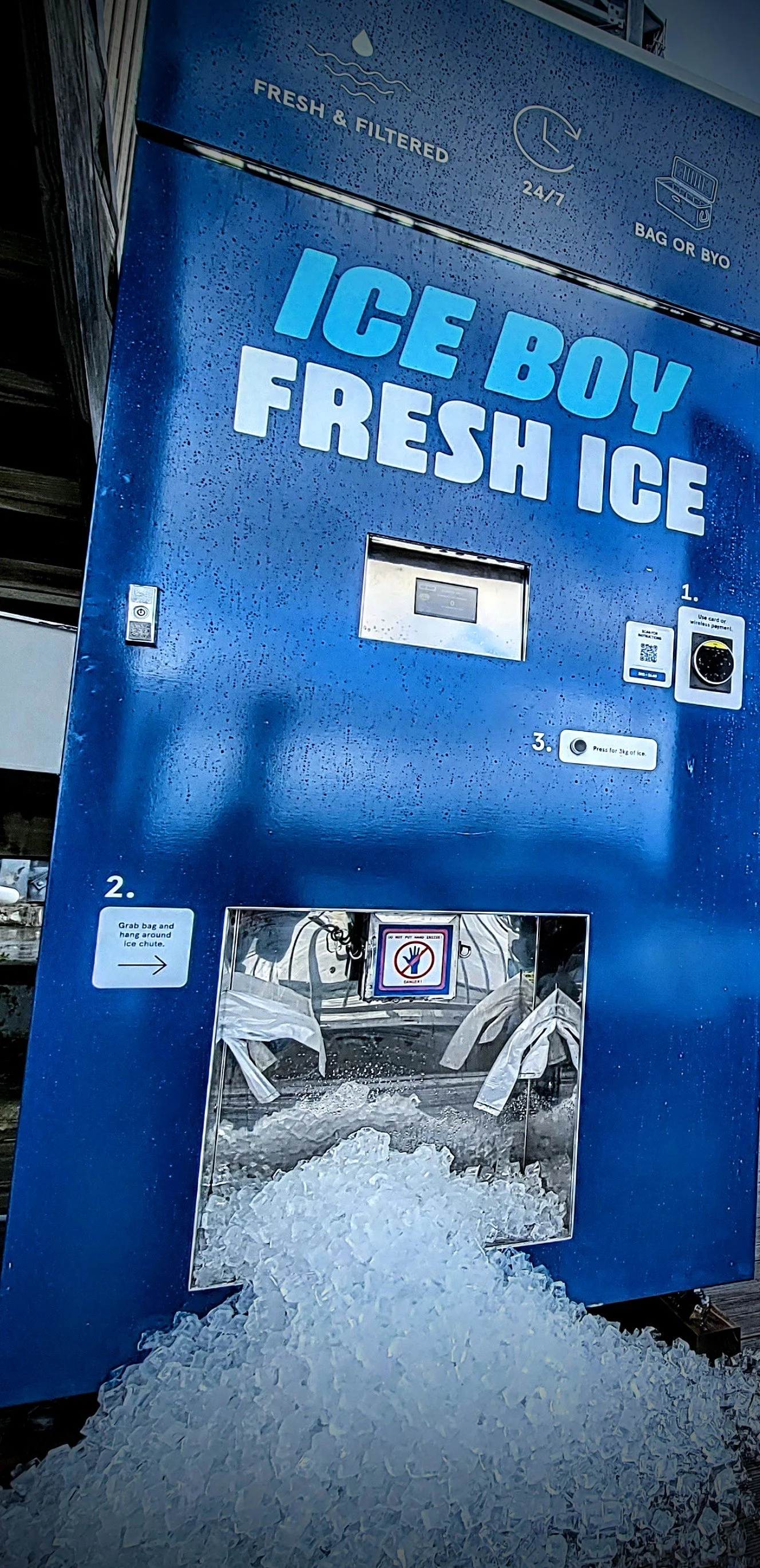
Owning an ICEBOY is locking in a fixed-price asset today.
You’re not just changing supply.
You’re changing the structure of your business.
From variable cost → controlled production
Instead of buying ice forever, you’re producing it on-site at a known cost base:
Power + Water
No trucks
No delivery schedules
No middle margins
Every weekly ice invoice is gone the moment it’s paid.
Pure expense. No upside.
A machine behaves differently
A machine:
Generates cash
Depreciates against your revenue
So while it’s earning, it’s also reducing your taxable income.
The psychological trap
At the start, the machine feels expensive.
You’re comparing it to a weekly invoice… and the invoice always feels easier.
But over time, the equation flips:
Wholesale prices creep up year after year
Your production cost stays relatively stable
Retail prices move with the market
That gap becomes margin.
Fast forward a few years
While others are paying:
Future fuel prices
Future labour rates
Future delivery costs
You’re still producing ice at a cost structure tied to today.
That’s when it stops feeling like a cost decision
and starts behaving like a cashflow engine.
The risk most people ignore
Wholesale relies on trucks showing up.
WHEN:
Fuel spikes
Routes tighten
Priorities shift
Deliveries get pushed out.
If the truck doesn’t show up, your freezer isn’t an asset.
It’s a liability taking up floor space.
Producing on-site removes that completely
No truck
No delays
No exposure
So who actually gets hit?
The ones relying entirely on delivered ice.
No control over pricing
No control over supply
Fully exposed to every increase
They wear:
Every cost rise
Every delay
Every margin squeeze
And who comes out ahead?
The operators who turned ice from a variable expense into a controlled asset.
Fixed cost
Predictable production
Expanding margins over time
The tipping point
At some point, wholesale ice stops being convenient
and starts being risky.
That’s when the real shift happens.
Zoom out
This isn’t about what ice costs today.
It’s about what you’re still paying for it in five years.

Increased Annual Net Revenue
Current Wholesale Model vs.
ICEBOY Ownership
Below is a detailed breakdown of gross and net revenue comparisons, illustrating the financial benefits of transitioning from a traditional wholesale ice purchase model—where you currently buy ice at $3 per bag and sell it for $6—to owning an ICEBOY machine and retaining the entire revenue per bag sold.
Why share your profit with a supplier?
Why deal with supply delays during peak demand?
Why pay for the high power consumption of a freezer running outside 24/7?
| Annual Sales
Total number of ice bags sold per year by the business
|
Gross Revenue (Current)
Total revenue generated from ice sales
|
Net Revenue (Current)
Net profit after deducting GST, income tax and wholesale cost
|
Gross Revenue (ICEBOY)
Total revenue from ice sales produced using the ICEBOY machine
|
Net Revenue (ICEBOY Before Payoff)
Net revenue generated before paying off the machine; no tax on profit, speeding up ROI. No wholesale bag cost
|
Years to Payoff Machine
Number of years to fully recoup the initial investment
|
Net Revenue After Payoff (Annually)
Annual net profit after the machine is paid off
|
|---|---|---|---|---|---|---|
| 2,000 | $12,000 | $2,814 | $12,000 | $10,200 | 4.89 | $6,834 |
| 4,000 | $24,000 | $5,628 | $24,000 | $20,400 | 2.45 | $13,668 |
| 6,000 | $36,000 | $8,442 | $36,000 | $30,600 | 1.63 | $20,502 |
Net Revenue Comparison Calculator
Enter your wholesale cost per bag and estimated annual sales to see the difference in net revenue for an example $6 sales price:
Results:
Gross Revenue: $
Annual Net Revenue (Current Wholesale Method): $
Annual Net Revenue (ICEBOY Before Payoff): $
Annual Net Revenue (ICEBOY After Payoff): $
Annual Benefit of ICEBOY After Payoff: $
Years to Payoff Machine:
Disclaimer: The figures presented are theoretical and intended to demonstrate the potential financial benefits of investing in an ICEBOY machine. Calculations include GST (15%) and an income tax rate of 33%. Net revenue values exclude additional operating expenses and are provided for comparison purposes only, specifically against the traditional ice sales model. This comparison highlights the impact of tax and GST reductions on revenue to illustrate the accelerated payback period of the initial machine purchase.
Detailed Explanation of ROI Table
-
Annual Sales:
Represents the number of ice bags sold each year. This number helps gauge the scale of operations and potential revenue.Gross Revenue (Current):
Gross Revenue (Current) is simply the total revenue before any costs are deducted. It is calculated by multiplying the number of bags sold by the selling price ($6). No expenses are subtracted at this point.Net Revenue (Current):
Net Revenue (Current) represents the profit after deducting the wholesale cost, GST, and income tax. Specifically:Selling Price: $6 per bag
Wholesale Cost: $3 per bag
GST: GST of 15% is applied to the gross selling price ($6 * 0.15 = $0.90).
Taxable Profit After GST: Profit before GST ($3) minus GST ($0.90) results in $2.10.
Income Tax: Tax is then applied at 33% of the taxable profit ($2.10 * 0.33 = $0.693).
Net Revenue per Bag: $2.10 - $0.693 = $1.407.
Gross Revenue (ICEBOY):
Gross Revenue (ICEBOY) represents the total revenue per bag sold when using the ICEBOY machine. Since the business retains the entire selling price of $6 per bag, this is the maximum potential revenue without any deductions for wholesale costs.Net Revenue (ICEBOY Before Payoff):
Net Revenue (ICEBOY Before Payoff) is the revenue after subtracting GST, but before applying income tax. During the payoff period, no income tax is applied, which allows for faster recoupment of the machine cost. Specifically, it's calculated as:Revenue After GST Deduction: $6 (Selling Price) - $0.90 (GST) = $5.10 per bag.
Net Revenue Before Payoff: $5.10 per bag, multiplied by the number of bags sold annually.
Years to Payoff Machine:
Years to Payoff indicates the number of years required to recover the initial investment cost of the ICEBOY machine based on annual sales and net revenue before payoff. The calculation is:Machine Cost
Annual Net Revenue Before Payoff: Net revenue per bag before income tax ($5.10) multiplied by annual sales.
Years to Payoff: Machine cost divided by the annual net revenue before payoff. A lower value indicates a quicker return on investment.
Net Revenue After Payoff (Annually):
Net Revenue After Payoff represents the profit once the ICEBOY machine is fully paid off. It includes deductions for GST and income tax:Revenue After GST: $5.10 per bag
Income Tax: 33% of $5.10, which is $1.683.
Net Revenue per Bag After Payoff: $5.10 - $1.683 = $3.417 per bag.
Annual Net Revenue After Payoff: $3.417 multiplied by the number of bags sold annually.
-
Full Revenue Control: By producing ice on-site, the full sales price ($6 per bag) is retained (minus GST and income tax)
Comparison:
Before: Limited to the $3 profit margin on wholesale purchases.
After: Full sales revenue becomes part of the net profit once the machine is paid off.
Full Revenue Control: By producing ice on-site, the full sales price ($6 per bag) is retained (minus GST and income tax).
Current Situation: When buying ice at $3 per bag and selling at $6, the net revenue is modest. For instance:
2,000 bags/year: Current net revenue = $2,814.
4,000 bags/year: Current net revenue = $5,628.
6,000 bags/year: Current net revenue = $8,442.
ICEBOY Scenario: By producing ice in-house, the net revenue is significantly higher because the profit margin is retained:
2,000 bags/year: Annual net revenue post-payoff = $6,834.
4,000 bags/year: Annual net revenue post-payoff = $13,668.
6,000 bags/year: Annual net revenue post-payoff = $20,502.
Example: A business selling 6,000 bags annually will see its annual net profit more than double, from $8,442 (current model) to $20,502 (after paying off the machine).
-
The time to recoup your investment varies based on sales volume:
2,000 bags/year: Payoff period = 4.89 years.
4,000 bags/year: Payoff period = 2.45 years.
6,000 bags/year: Payoff period = 1.63 years.
What This Means: After this period, the investment can be fully recovered, and all net revenue beyond operating costs becomes profit.
-
Elimination of Wholesale Costs: Buying ice at $3 per bag will no longer be necessary, saving significant expenses over time.
Protection Against Rising Costs: As fuel and labour costs increase, so does the price of wholesale ice. Owning an ICEBOY machine protects against these rising costs, ensuring more stable and predictable expenses.
Example: With traditional wholesale purchases, increased costs due to inflation would cut into profit margins. An ICEBOY machine eliminates this risk, providing long-term financial security.
-
Immediate ROI After Payoff: After the initial 1.6 to 4.9 years (payoff period), the profit from each sale significantly contributes to total profit.
Compounded ROI: Each year post-payoff, profits accumulate:
Year 1 Post-Payoff: $20,502 profit for 6,000 bags.
Year 2 Post-Payoff: Total of $41,004.
Year 3 Post-Payoff: Total of $61,506.
Long-Term Gain: Over 5 years post-payoff, total compounded profit = $20,502 x 5 = $102,510, well above the initial investment.
Key Takeaways:
Increased Annual Net Revenue: By transitioning from a wholesale model to owning an ICEBOY machine, businesses can significantly boost their net revenue, retaining more profit from each bag sold instead of relying on limited margins.
Payoff Period: Depending on the scale of operations (ranging from 2,000 to 6,000 annual ice bag sales), the ICEBOY machine can be fully paid off within 1.63 to 4.89 years, making it a smart, time-effective investment.
Long-Term Benefits: Once the machine is paid off, businesses experience substantial annual savings and increased net revenue, which can double or even triple their current profits compared to a traditional wholesale model.
Reduced Operating Costs: With an ICEBOY machine, businesses can minimise their reliance on external suppliers, mitigating risks associated with supply chain disruptions and rising wholesale prices.
Revenue Retention and Profitability: After the payoff period, businesses retain all profits (minus operating expenses and taxes), resulting in compounded ROI year over year. This leads to greater financial sustainability and potential growth.
Compounded ROI: As profits accumulate annually post-payoff, businesses achieve exponential returns on their initial investment. Over a span of years, the ongoing profit significantly outweighs the original investment, showcasing the ICEBOY machine as a valuable asset that generates continuous income.
In Your Control:
Investing in an ICEBOY machine is a strategic decision for businesses aiming to maximise profit margins, achieve operational independence, and safeguard against future market changes. With the right volume of sales, the machine quickly pays for itself and continues to provide long-term financial benefits.
Current Model vs. ICEBOY Ownership
Why Investing in an ICEBOY Machine Pays Off
-

Long-Term Savings
Investing in an ICEBOY machine provides immediate financial benefits along with substantial long-term savings, protecting your business from rising costs and operational challenges.
Elimination of Wholesale Costs: Producing ice on-site removes wholesale expenses, instantly increasing profit margins.
Protection Against Rising Costs: Shield your business from rising costs for fuel, labour, and materials. Keep production costs stable.
Predictable Budgeting: Achieve stable operating costs for better financial planning.
No Delivery Fees: Eliminate transportation, handling charges, and peak season surcharges.
Reduced Supplier Dependency: Control production, avoid supply chain disruptions, and resist sudden price hikes.
Consistent Pricing: Keep your customer pricing stable, enhancing loyalty and competitiveness.
Energy-Efficient Operation: ICEBOY machines are energy-efficient, lowering power costs compared to traditional freezers.
ICEBOY offers substantial long-term savings by eliminating wholesale costs, providing financial stability, and supporting sustainable growth.
-

Compounded ROI
Compounded ROI means that once your ICEBOY machine is paid off, each subsequent year adds to an ongoing return. This accumulation turns an initial gain into exponential value over time.
Initial Payoff Period: Revenue first covers the machine's cost, focusing on recouping the investment.
Post-Payoff Profit: After payoff, revenue turns into profit, boosting margins.
Growing Returns: Yearly profits accumulate, leading to significant overall growth.
Simple vs. Compounded ROI: Simple ROI is a one-time return. Compounded ROI keeps adding value year after year.
Why It Matters:
Sustained Earnings: Continual profits from ICEBOY.
Exponential Growth: Increasing returns over time.
Risk Reduction: Long-term profits reduce effective risk.
Ongoing Value: Keeps generating value long after payoff.
Compounded ROI means once ICEBOY is paid off, every year adds to profit, making it a powerful long-term investment.
-

Operational Independence
With an ICEBOY machine, your business shifts from relying on suppliers to becoming fully self-sufficient. Producing ice on-site eliminates uncertainties and risks linked to supply chain fluctuations.
Reduced Disruptions: No delays from supplier issues or shortages.
Consistent Supply: Always meet ice demand without relying on deliveries.
Cost Control: Avoid price hikes from suppliers and maintain stable production costs.
Operational Flexibility: Adjust production to meet demand changes.
Enhanced Reliability: Ensure consistent service and customer satisfaction.
An ICEBOY machine offers unmatched control, stability, and independence for your business.
-

Asset Ownership
Investing in an ICEBOY machine doesn’t just boost profits—it adds a valuable, income-generating asset to your business. As a fixed asset, ICEBOY strengthens your balance sheet, unlike regular expenses that offer no long-term value. This machine becomes a tangible resource that drives financial stability and growth.
Increased Business Valuation: The ICEBOY machine adds equity to your business,
Depreciation Tax Benefits: Depreciate the machine over time to lower your taxable income, providing tax savings that directly benefit your bottom line.
Improved Cash Flow: After payoff, ICEBOY continues to generate profit without substantial costs, providing consistent cash flow that boosts financial flexibility.
Resale Value: Unlike consumables, ICEBOY retains value, and a well-maintained machine can be resold, giving you additional return if you upgrade or change business strategy.
Adding an ICEBOY machine isn’t just an operational choice—it’s a strategic investment in the long-term growth, financial health, and sustainability of your business.